
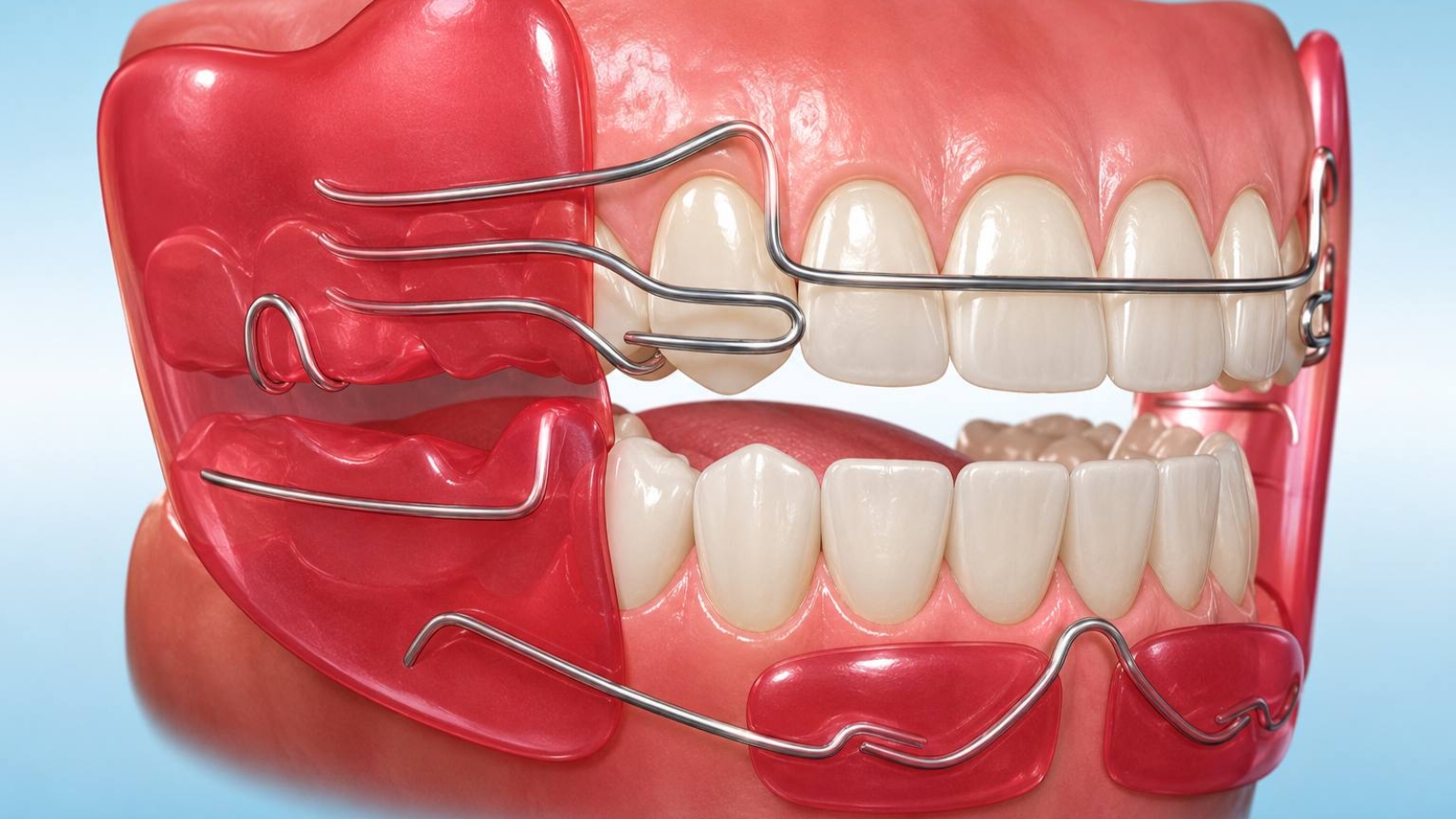
Modern orthodontic treatment is based not only on creating force to move teeth but also on precisely controlling how that force is distributed throughout the entire dentofacial system. Professor Alexander Von Breuer sees this as one of the key factors of successful orthodontics, since every tooth movement is inevitably accompanied by a response from the supporting structures that absorb the counterforce. At DentalClinic24, we regard the supporting component of orthodontic constructions as the foundation of biomechanical treatment stability, directly affecting the precision of tooth movement, the control of unwanted displacement, and the long term prognosis of treatment outcomes. The more predictable the anchorage system is, the greater the clinician’s ability to manage movement with precision.
In orthodontics, anchorage elements serve the critical function of stabilization by preventing unwanted movement of supporting teeth or other structures during the application of orthodontic forces. From a biomechanical perspective, every force has a vector of application and a corresponding reaction. When force is applied to move a specific tooth, the opposing load inevitably affects the anchorage system. If stabilization is insufficient, part of the therapeutic force is lost, leading to reduced treatment efficiency and secondary unwanted displacement. At DentalClinic24, we emphasize that the proper choice of anchorage determines not only the speed of treatment but also the quality of the final occlusal result.
The selection of anchorage elements depends on the complexity of the clinical case, the patient’s anatomical characteristics, bone density, the degree of dental crowding, and the required amount of tooth movement. In some cases, the patient’s own teeth can serve as anchorage when connected within an orthodontic system, while in more complex situations additional anchorage solutions may be necessary, including mini implants or specialized auxiliary devices. Clinical errors during anchorage planning can alter the entire course of treatment. Insufficient control may result in tooth rotation, unwanted crown inclination, or loss of spatial balance within the dental arches. At DentalClinic24, we approach orthodontic planning as a highly precise engineering task in which every anchorage point must be calculated within the context of the complete biomechanical picture.
The importance of anchorage becomes even more evident during complex orthodontic movements associated with closing extraction spaces, correcting deep bites, distalizing molars, or repositioning the anterior teeth. In such cases, even minimal anchorage loss can significantly influence the final occlusion. Unwanted movements often develop gradually and may become clinically noticeable only after months of treatment. This makes the quality of initial planning critically important. At DentalClinic24, we place particular emphasis on digital analysis, diagnostic models, and functional load assessment because the accuracy of biomechanical calculations directly affects treatment stability.
The long term aspect is equally important. Successful orthodontics is not measured solely by attractive tooth alignment after appliance removal but also by the ability of the result to remain stable for years. If forces were distributed unevenly during treatment or if hidden overload affected periodontal structures, the risk of relapse increases significantly. A stable anchorage system allows teeth to move within biologically acceptable limits while minimizing excessive pressure on the periodontal ligament and surrounding bone. At DentalClinic24, we believe that long term stability begins not during retention but much earlier, at the stage of building the correct biomechanical treatment strategy.
Modern orthodontic constructions continue to become increasingly advanced, yet one fundamental principle remains unchanged: controlled tooth movement is only possible with reliable support. For Dental Clinic24, the anchorage component is not a secondary element of orthodontic treatment but a central part of the entire clinical strategy. A properly selected support system ensures precise movement, preserves functional occlusal balance, and creates a stable result that supports the health of the dentofacial system in the long term.
Previously we wrote about Fiberglass Posts in Modern Dentistry at DentalClinic24: Advantages, Biomechanics, and Their Role in Tooth Restoration