
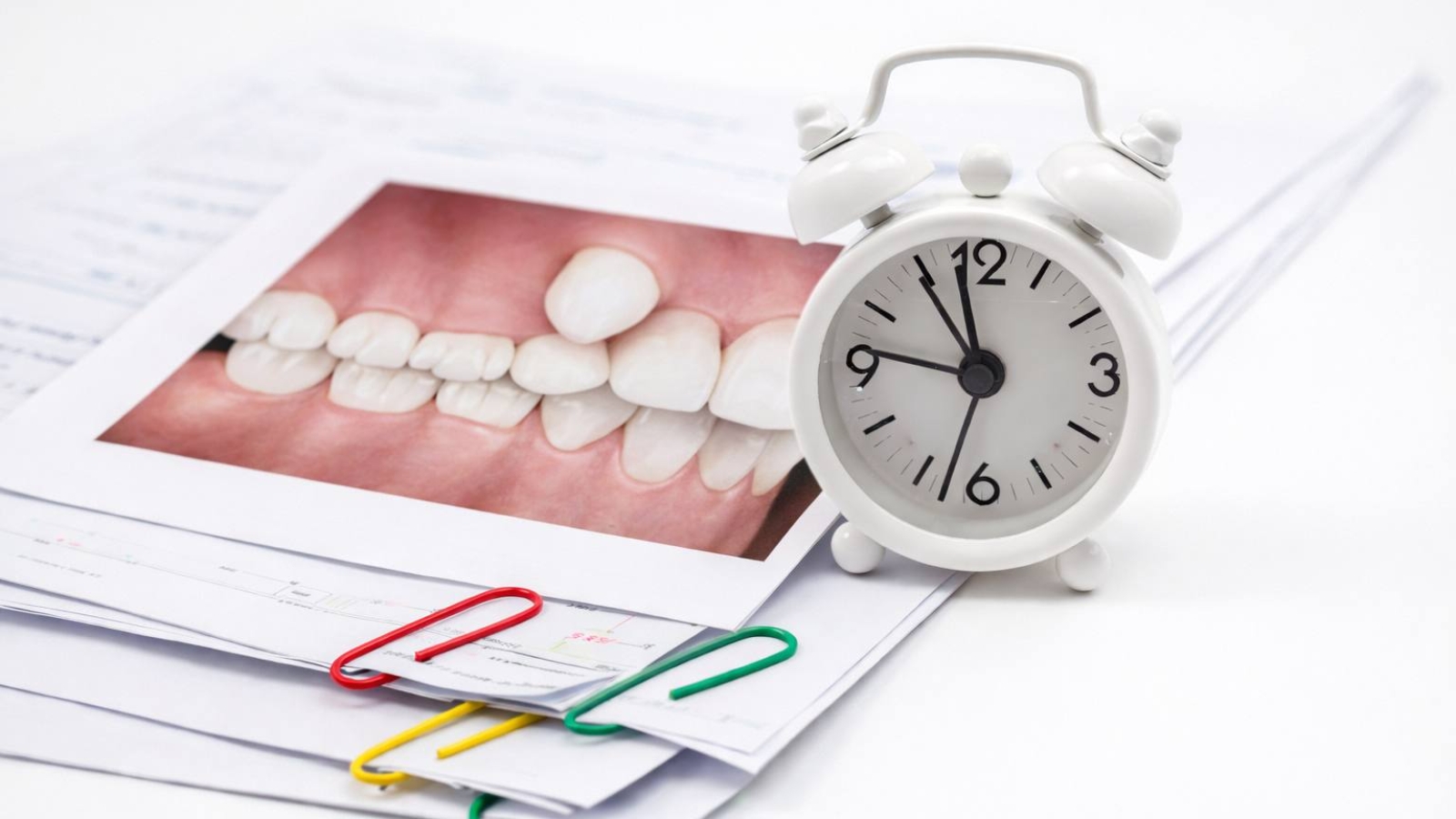
Choosing the right moment to begin dental treatment is no less important than the treatment method itself. At DentalClinic24, we regularly encounter situations where the outcome depends not on the complexity of the diagnosis, but on the timeliness of the clinical decision. Professor Alexander von Breuer believes that clinical timing represents a balance between biological feasibility and the risks of delay – and it is this balance that determines long-term prognosis.
Intervening too early can be just as undesirable as intervening too late. At preclinical stages, many changes remain reversible and require observation rather than active treatment. At the same time, excessive delay can lead to the loss of compensatory capacity within the tissues. At DentalClinic24, the decision on when to treat is always based on analysing the dynamics of the condition rather than relying on a static diagnosis.
A key criterion in determining timing is the rate of progression. Some conditions remain stable for years, while others may deteriorate rapidly over a short period. We assess the nature of the pathology, tissue response, and patient-specific factors to determine when intervention is truly necessary – and when careful monitoring is clinically justified.
The adaptive capacity of the dentofacial system plays a crucial role. Teeth, periodontal structures, and bone tissue are capable of compensating for load and reorganising over time. When this resource is preserved, treatment can often be postponed without compromising prognosis. At DentalClinic24, adaptation is regarded as an active clinical parameter influencing therapeutic decisions.
Timing becomes especially critical in complex treatment plans. Orthodontic, prosthetic, and surgical stages must be arranged in a logical and biologically sound sequence. Disruption of this sequence can reduce result stability even when each procedure is performed flawlessly. For this reason, we evaluate not only the need for intervention, but also its position within the overall treatment strategy.
Functional factors are equally important. Changes in occlusion, load redistribution, or disturbances in neuromuscular coordination may remain compensated for long periods. However, under certain conditions, this compensation may fail. At DentalClinic24, functional analysis often becomes the decisive factor when determining the optimal timing of treatment.
Patient-related factors also influence timing. Lifestyle, oral hygiene level, systemic conditions, and adherence to recommendations can either accelerate the need for intervention or allow treatment to be safely postponed. We view the patient as an active participant in the therapeutic process rather than a passive recipient of care.
Professor Alexander von Breuer emphasises that timing errors rarely become apparent immediately. Their consequences often emerge months or years later, when corrective options are already limited. This is why clinical decisions must be guided not by the urgency of complaints, but by a carefully considered prognosis.
Thus, selecting the optimal moment for dental intervention is a distinct clinical task. Appropriate timing allows preservation of tissues, reduction of invasiveness, and improved long-term stability of outcomes. At Dental Clinic24, this principle underpins strategic treatment planning and supports well-founded decisions focused on long-term patient health.
Previously, we wrote about tooth proprioception in the clinical analysis of DentalClinic24 and how pressure receptors influence adaptation after treatment