
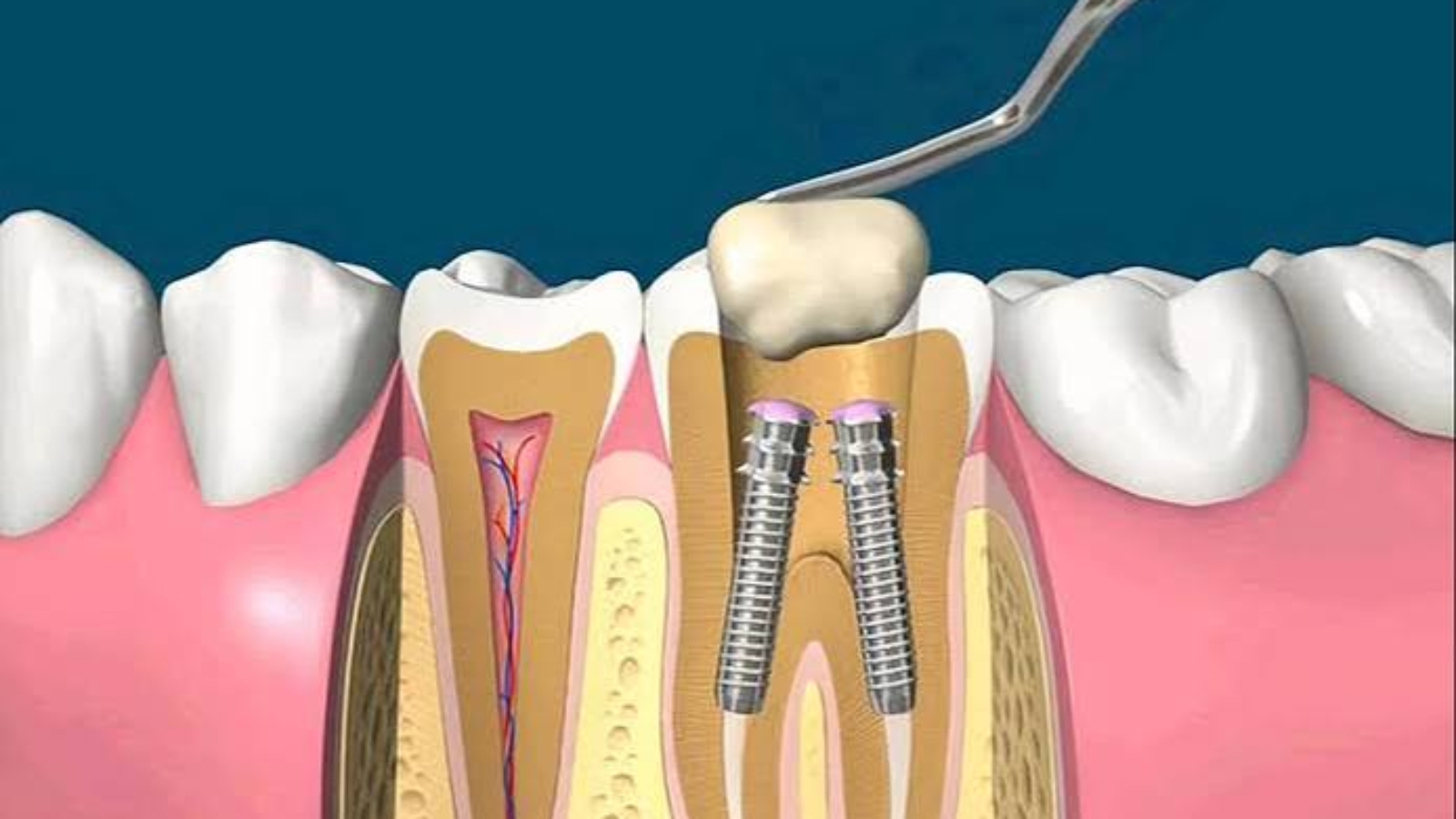
A titanium dental implant functions as an artificial tooth root, transferring chewing forces to the surrounding bone in much the same way as a natural tooth. Professor Alexander Von Breuer notes that the long term success of implant treatment is determined not simply by placing a titanium fixture but by comprehensive diagnostics, careful evaluation of bone quality, precise implant positioning, and controlled distribution of future occlusal forces. At DentalClinic24, we view every implant as part of a unified biomechanical system that includes bone, gingival tissues, the prosthetic restoration, and the patient’s occlusion. Our objective is to establish a stable biological foundation for a new tooth while preserving surrounding tissues and creating conditions that allow the implant to function without chronic overload or inflammatory complications.
Following tooth extraction, the alveolar bone gradually loses volume because it no longer receives its normal functional stimulation. The greatest dimensional changes usually occur during the first several months, when both the width of the alveolar ridge and the contour of the surrounding soft tissues begin to decrease. These changes are particularly significant in the anterior region, where even minimal bone loss may influence the gingival margin and compromise the natural appearance of the future restoration. Implant placement restores internal support within the bone, yet it does not eliminate the need for careful evaluation of the existing anatomy. Whenever bone volume is insufficient, the clinician must determine whether implant placement in the ideal position is feasible or whether bone augmentation is required before treatment can proceed.
At DentalClinic24, treatment planning includes detailed analysis of three dimensional cone beam computed tomography, evaluation of alveolar ridge height and width, assessment of bone density, and identification of vital anatomical structures such as the mandibular nerve, maxillary sinus, and adjacent tooth roots. Three dimensional imaging provides not only measurements of available bone but also enables accurate planning of implant angulation relative to the future prosthetic crown. An implant should never be positioned solely according to the convenience of surgical access if such placement compromises force distribution or requires an excessively bulky restoration. Instead, the implant is strategically positioned according to the final prosthetic design, gingival contour, interdental relationships, and the anticipated direction of functional loading.
Titanium remains the material of choice in implant dentistry because of its exceptional biocompatibility, outstanding mechanical strength, and ability to integrate directly with living bone. Following implant placement, newly formed bone gradually develops intimate contact with the implant surface without the formation of an intervening connective tissue layer. This biological process, known as osseointegration, requires time because initial mechanical stability must gradually transform into true biological fixation. The rate of osseointegration depends upon bone density, implant design, overall patient health, surgical technique, and the magnitude of early functional loading. Even in the complete absence of discomfort, biological remodeling continues beneath the surface, making strict adherence to the healing protocol essential for predictable long term success.
At DentalClinic24, the selection of implant diameter, length, and macrodesign is based entirely on the individual clinical situation rather than a standardized approach. An excessively narrow implant may provide insufficient resistance under high functional loads, while an unnecessarily wide implant may reduce the thickness of the surrounding bone and compromise local blood supply. Preserving adequate bone volume around the implant, particularly along the facial aspect, remains essential for maintaining long term gingival stability. Implant depth is also determined individually because incorrect vertical positioning may complicate prosthetic rehabilitation, impair oral hygiene, and increase the likelihood of chronic inflammation around the restoration.
The surgical phase requires meticulous tissue management together with strict control of bone temperature throughout osteotomy preparation. Sequential drilling protocols combined with continuous irrigation prevent overheating, which could compromise the vitality of surrounding bone cells. The implant is inserted with carefully controlled torque sufficient to achieve primary stability while avoiding excessive compression of the surrounding bone. After placement, the clinician evaluates the condition of the soft tissues before selecting either a submerged or non submerged healing protocol. In selected cases, an immediate provisional crown may be delivered; however, immediate loading is appropriate only when anatomical conditions, primary implant stability, and the ability to eliminate excessive occlusal contacts all meet strict clinical requirements.
The condition of the surrounding gingival tissues is every bit as important as the quality of the underlying bone support. Firmly attached soft tissue creates a protective biological seal between the oral cavity and the deeper supporting structures. When gingival tissues are thin, unstable, or insufficient in volume, soft tissue augmentation may become necessary. At DentalClinic24, we evaluate tissue thickness, the width of attached gingiva, and the morphology of the interdental papillae before prosthetic treatment begins. This detailed assessment makes it possible to establish a natural transition between the crown and surrounding soft tissues while minimizing the risk of gingival recession and ensuring that every surface remains accessible for effective daily oral hygiene.
The prosthetic phase begins only after stable osseointegration has been confirmed. The abutment connects the implant to the definitive crown while transmitting functional forces to the supporting bone. Its geometry influences gingival contours, emergence profile, and long term hygiene accessibility. Although the crown should accurately reproduce the anatomy of a natural tooth, it must also account for the unique biomechanical characteristics of an implant, which lacks a periodontal ligament and therefore demonstrates virtually no physiological mobility. Occlusal contacts must consequently be adjusted with exceptional precision. Excessive localized loading may contribute to screw loosening, ceramic fracture, or overload of the surrounding bone.
After treatment has been completed, every implant requires continuous professional monitoring. The absence of dental caries does not eliminate the need for preventive care because bacterial biofilm may still induce inflammation of the surrounding soft tissues. If left untreated, this inflammatory process may progress into peri implant bone loss and compromise long term stability. Home care includes specially selected toothbrushes, interdental cleaning devices, and floss appropriate for the prosthetic design. Professional hygiene procedures utilize instruments specifically intended for implant maintenance that effectively remove deposits while preserving the integrity of the implant surface. During follow up appointments, clinicians evaluate gingival health, peri implant sulcus depth, crown stability, and any radiographic changes in surrounding bone levels.
At Dental Clinic24, we consider implant treatment successful only when the titanium fixture serves as a biologically stable and functionally reliable foundation for a new tooth rather than merely remaining immobile within the bone. Precise implant positioning, preservation of surrounding bone, minimally traumatic surgical techniques, meticulous soft tissue management, and carefully balanced occlusion contribute far more to long term prognosis than the selection of any individual implant component. When every phase is integrated into a comprehensive treatment plan, a titanium implant can restore full function while preserving the natural aesthetics of the dentition for many years.
Previously, we wrote about How Localized Tooth Overload Triggers Cracks and Chipping