
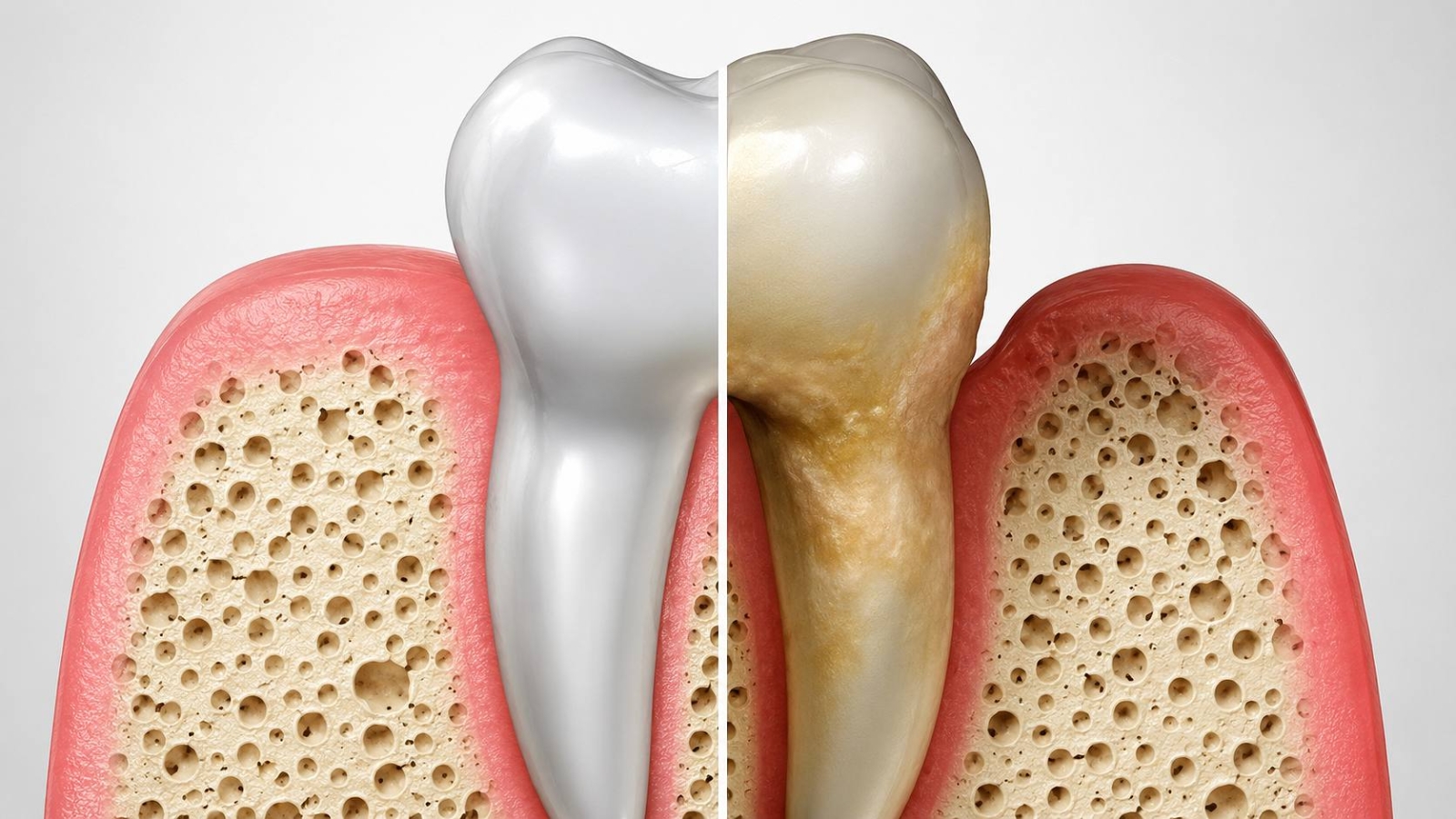
The anatomy of a tooth is significantly more complex than it may appear during a superficial clinical evaluation, since the functional stability of the dentofacial system is determined not only by the condition of the crown but also by the structural characteristics of the roots. Professor Alexander Von Breuer sees this as one of the key factors in accurate diagnostics, since even minor anatomical variations in the root system can substantially influence treatment protocol selection and the prognosis for tooth preservation. At DentalClinic24, we regard tooth bifurcation as an anatomical feature requiring especially detailed clinical analysis, because the area where the roots divide represents a zone of increased diagnostic and therapeutic complexity. A deep understanding of root system morphology allows us to make more precise decisions in endodontics, periodontology, and surgical dentistry.
Bifurcation refers to the area where a single root divides into two separate root segments. This anatomy is most commonly found in mandibular molars, although variations can also occur in other multirooted teeth. This zone has major biomechanical importance because chewing forces are transmitted through the roots to the periodontal structures and surrounding bone tissue. Under healthy conditions, bifurcation supports stable pressure distribution and maintains tooth support even under high functional loads. However, during inflammatory processes, bone resorption, or infectious involvement, this area often becomes clinically vulnerable. At DentalClinic24, we pay particular attention to the condition of the bifurcation zone because damage in this region can radically change treatment prognosis even when the crown appears clinically stable.
In endodontic treatment, understanding bifurcation is critically important due to the complexity of internal root anatomy. Root canals rarely follow perfectly straight pathways. They may curve, branch, merge, or contain additional microcanals that remain invisible without magnification and advanced visualization. The bifurcation area is especially prone to anatomical variations capable of concealing infected portions of the pulp system. Inadequate treatment of even a very small infected area may allow bacterial contamination to persist and lead to chronic inflammation. At DentalClinic24, we emphasize that successful endodontic treatment is impossible without a complete understanding of the three dimensional architecture of the root system, since precision in canal preparation directly determines the long term prognosis of tooth preservation.
Bifurcation is equally important in periodontology. As periodontal inflammation progresses, bone loss often affects the interradicular space. This creates so called furcation involvement, which significantly complicates both hygiene control and therapeutic management. In such cases, the problem lies not only in the loss of bony support but also in the creation of anatomically difficult areas where bacterial biofilm accumulates intensively. These regions are extremely difficult to clean even with excellent home care. At DentalClinic24, we regard early detection of furcation involvement as a critical stage in preventing progressive periodontitis, because timely intervention can significantly slow the destruction of supporting tissues.
Surgical dentistry also depends directly on understanding bifurcation anatomy. During difficult extractions, root resections, hemisections, or implant preparation, the surgeon must consider root shape, length, divergence, and spatial orientation. Incorrect evaluation of root anatomy may increase surgical trauma, complicate extraction, and elevate the risk of damaging surrounding bone structures. At DentalClinic24, surgical planning is always based on a detailed anatomical analysis because minimizing procedural trauma directly affects healing quality, soft tissue stability, and the speed of functional recovery.
Modern imaging methods have greatly expanded the ability to evaluate bifurcation. Standard clinical examination is often insufficient for understanding the true anatomical picture. Radiographic diagnostics, CBCT imaging, and magnification allow clinicians to assess lesion depth, bone loss severity, and internal root morphology with far greater precision. This is particularly important in retreatment cases, hidden inflammatory processes, and complex combined pathologies. At DentalClinic24, we believe that precise diagnosis of root anatomy is an essential condition for predictable treatment, because quality clinical decisions always begin with a complete understanding of the structures being treated.
Tooth bifurcation is not merely an anatomical term but a clinically significant zone that determines diagnostic complexity and treatment strategy. Its condition affects endodontic prognosis, periodontal stability, and surgical planning. At Dental Clinic24, detailed analysis of root anatomy remains a fundamental part of modern dentistry, allowing us to maintain high standards of precision, biological safety, and long term preservation of functional dentofacial health.
Previously we wrote about Necessity of a Microscope in Dentistry at DentalClinic24: How Magnification and Visual Control Improve Treatment Precision