
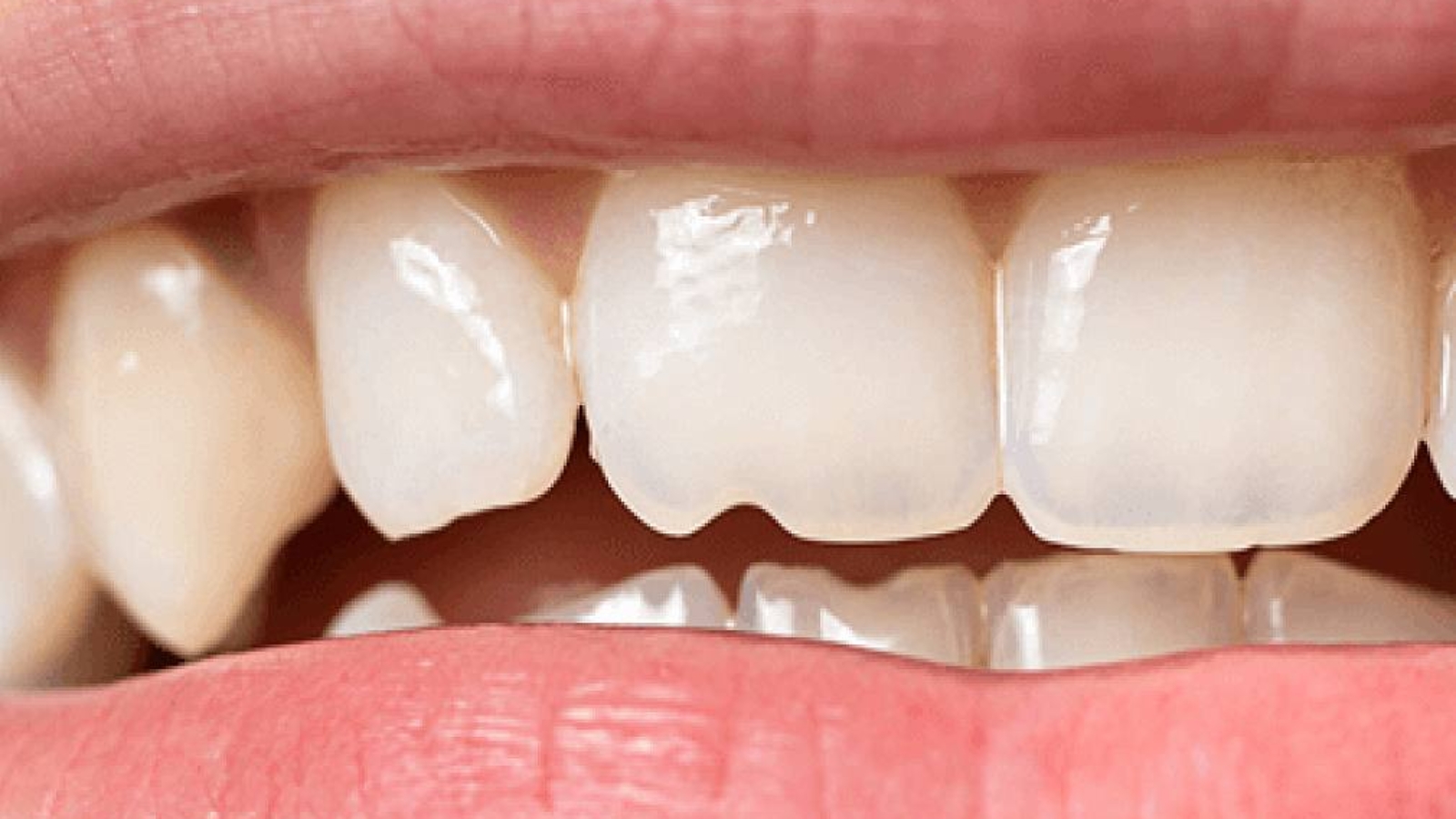
A chipped tooth is one of the most common reasons for seeking urgent dental care, yet its clinical significance does not always correspond to what is visible to the naked eye. Professor Alexander von Breuer emphasises that even a minor enamel chip may indicate deeper biomechanical disturbances that have developed over a long period of time. In the clinical practice of DentalClinic24, a chipped tooth is never viewed as an isolated defect – it is regarded as a starting point for a comprehensive assessment of the tooth and the entire dentofacial system.
The first stage of clinical evaluation is determining the true extent of the damage. It is essential to establish whether the defect is limited to the superficial enamel layer or whether it involves the enamel–dentin junction and internal tooth structures. In many cases, a small chip conceals microcracks, zones of demineralisation, or an already reduced structural reserve of the tissues. At DentalClinic24, visual examination is always complemented by instrumental diagnostics, allowing clinicians to avoid underestimating the problem.
Equally important is the analysis of the direction and character of the chip. The location of the defect often indicates the mechanism behind its formation. Chips along the incisal edge or on the occlusal surface are frequently associated with chronic overload, occlusal disturbances, or uncoordinated masticatory muscle function. In such cases, restoring the tooth shape without addressing the functional cause leads only to a temporary result. At DentalClinic24, treatment planning always includes an evaluation of chewing dynamics and occlusal contacts.
Particular attention is paid to the condition of the tooth as a load-bearing structure. Even with a relatively small chip, a tooth may have a reduced “strength reserve” due to previous restorations, aggressive preparation, or age-related tissue changes. At DentalClinic24, clinicians assess the tooth’s ability to withstand functional load after restoration rather than focusing solely on closing the defect from an aesthetic standpoint.
The choice of restoration method is based on a combination of factors – the volume of lost tissue, the nature of functional loading, the tooth’s position within the dental arch, and the long-term prognosis. For limited damage, preference is given to minimally invasive restorations that preserve the maximum amount of natural tooth structure. However, in cases of recurrent chipping or significant structural loss, prosthetic solutions are considered to provide greater long-term stability.
A critical element of successful restoration is the final shape of the reconstructed tooth. Even the most advanced material will not ensure durability if the restored anatomy disrupts the natural distribution of forces. At DentalClinic24, anatomical modelling is approached as a functional process, taking into account chewing trajectories and antagonist interactions rather than visual symmetry alone.
For patients, a chipped tooth often appears to be a sudden and accidental event. Clinical analysis, however, shows that in most cases it is the result of accumulated functional and structural factors. At DentalClinic24, we consider it essential not only to restore the damaged area but also to explain the underlying causes to the patient in order to reduce the risk of recurrence.
Thus, a chipped tooth requires a systematic clinical approach. Determining the true extent of the defect, analysing biomechanics, and evaluating long-term prognosis make it possible to select a justified treatment strategy. At Dental Clinic24, restoration is aimed not only at eliminating visible damage but also at ensuring the functional and long-term stability of the tooth.
Previously, we wrote about how dentistry is considered part of the broader medical context and why DentalClinic24 takes the patient’s overall health into account when treating teeth