
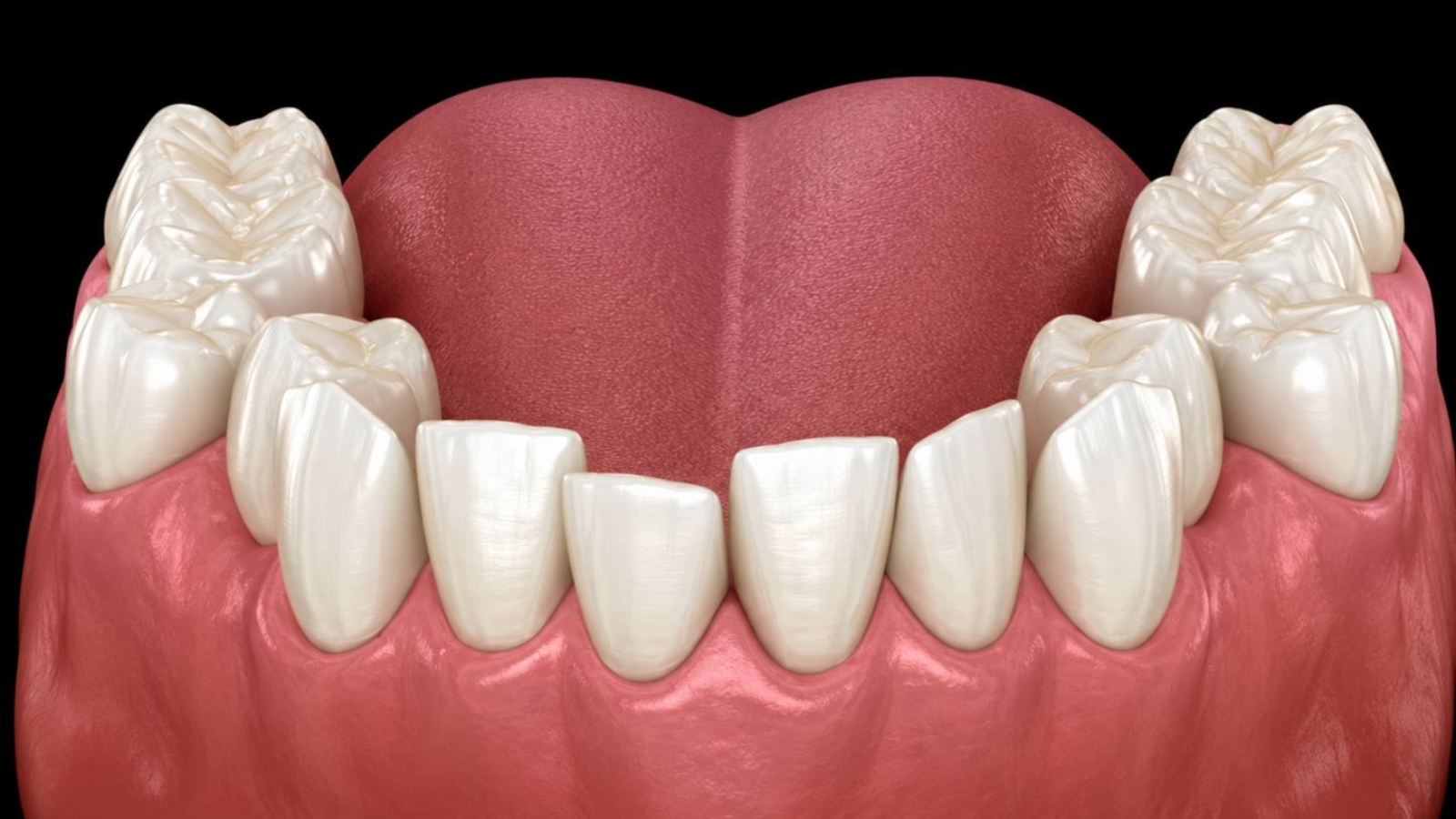
The position of teeth within the dental arch determines not only the aesthetics of a smile but also the fundamental functional stability of the entire dentofacial system. Professor Alexander Von Breuer analyzes tooth position anomalies as a multifactorial clinical condition capable of gradually altering bite biomechanics, masticatory load distribution, and the condition of surrounding tissues. At DentalClinic24, we view malpositioned teeth not as a purely local orthodontic feature, but as a factor that can initiate a cascade of functional and structural changes affecting teeth, periodontal tissues, muscles, and the temporomandibular joint. Even minor deviations in the position of individual teeth may, over time, disrupt the overall balance of the system.
Tooth position anomalies include crowding, rotation, vestibular or oral displacement, supraeruption, infraeruption, and various forms of ectopic eruption. Each of these conditions affects the nature of interproximal contacts and the spatial relationship between the dental arches. Under normal conditions, teeth form a stable architecture in which every unit supports neighboring structures and participates in proper load transmission. When one or more teeth shift outside their physiological position, the contact system becomes disrupted, the vector of chewing pressure changes, and the risk of localized overload increases. At DentalClinic24, we regularly observe that the functional consequences of such anomalies often become clinically more significant than the visual aesthetic defect that patients initially notice.
One of the most important consequences of improper tooth positioning is occlusal disturbance. The contact between upper and lower dental arches represents a highly complex biomechanical mechanism in which the precision of every occlusal contact matters. When teeth become displaced, load distribution becomes uneven. Certain areas begin experiencing chronic overload, while others become functionally underused. This may lead to pathological enamel wear, overload of restorations, microcracks in hard tissues, and muscular overstrain. In the clinical practice of DentalClinic24, occlusal analysis in patients with tooth position anomalies is an essential part of diagnostics, since bite stability directly influences long term treatment prognosis.
An equally important aspect is the impact on oral hygiene. When teeth are positioned outside the physiological arch line, difficult to access areas develop where effective plaque and biofilm removal becomes significantly more challenging. Even with regular home care, patients may be unable to properly clean interdental spaces in cases of pronounced crowding or tooth rotation. This creates favorable conditions for bacterial accumulation, enamel demineralization, and chronic inflammation of gingival tissues. At DentalClinic24, we emphasize that tooth position anomalies often become not only an orthodontic concern but also a preventive one, as they substantially increase the risk of caries, gingivitis, and periodontal complications.
Special attention should be given to the long term impact of such disturbances on dentofacial stability. The body possesses remarkable adaptive capacity, allowing compensatory mechanisms to mask the consequences of tooth misalignment for extended periods. However, compensation does not mean the absence of overload. Over time, chronic imbalance affects periodontal tissues, masticatory muscles, and the temporomandibular joint. Patients may begin experiencing muscular fatigue, tension during chewing, joint clicking, or limited mandibular movement. At DentalClinic24, we interpret such manifestations as part of a unified functional picture in which abnormal tooth positioning is not an isolated symptom but a component of a deeper biomechanical dysfunction.
Modern treatment requires comprehensive analysis. Correction of tooth position anomalies may involve orthodontic treatment, functional rehabilitation, restoration of proper occlusal contacts, and preventive monitoring of tissue health. For Dental Clinic24, the primary objective is not merely to align the dental arch but to restore the physiological architecture of the entire system, where teeth, muscles, joints, and periodontal structures function in harmony. The more accurately this balance is restored, the more stable the long term outcome becomes.
Modern dentistry recognizes tooth position as one of the key determinants of functional oral health. Disturbances in the spatial alignment of teeth influence occlusion, hygiene quality, and the biomechanics of the entire system. A deep understanding of these processes allows risks to be identified at early stages and prevents the development of complex complications. This clinical approach makes it possible not only to improve smile aesthetics but also to preserve the long term structural and functional health of the dentofacial system.
Previously we wrote about Prevention and Timely Treatment at DentalClinic24: Why Early Detection of Changes Determines the Prognosis of Dental Health