
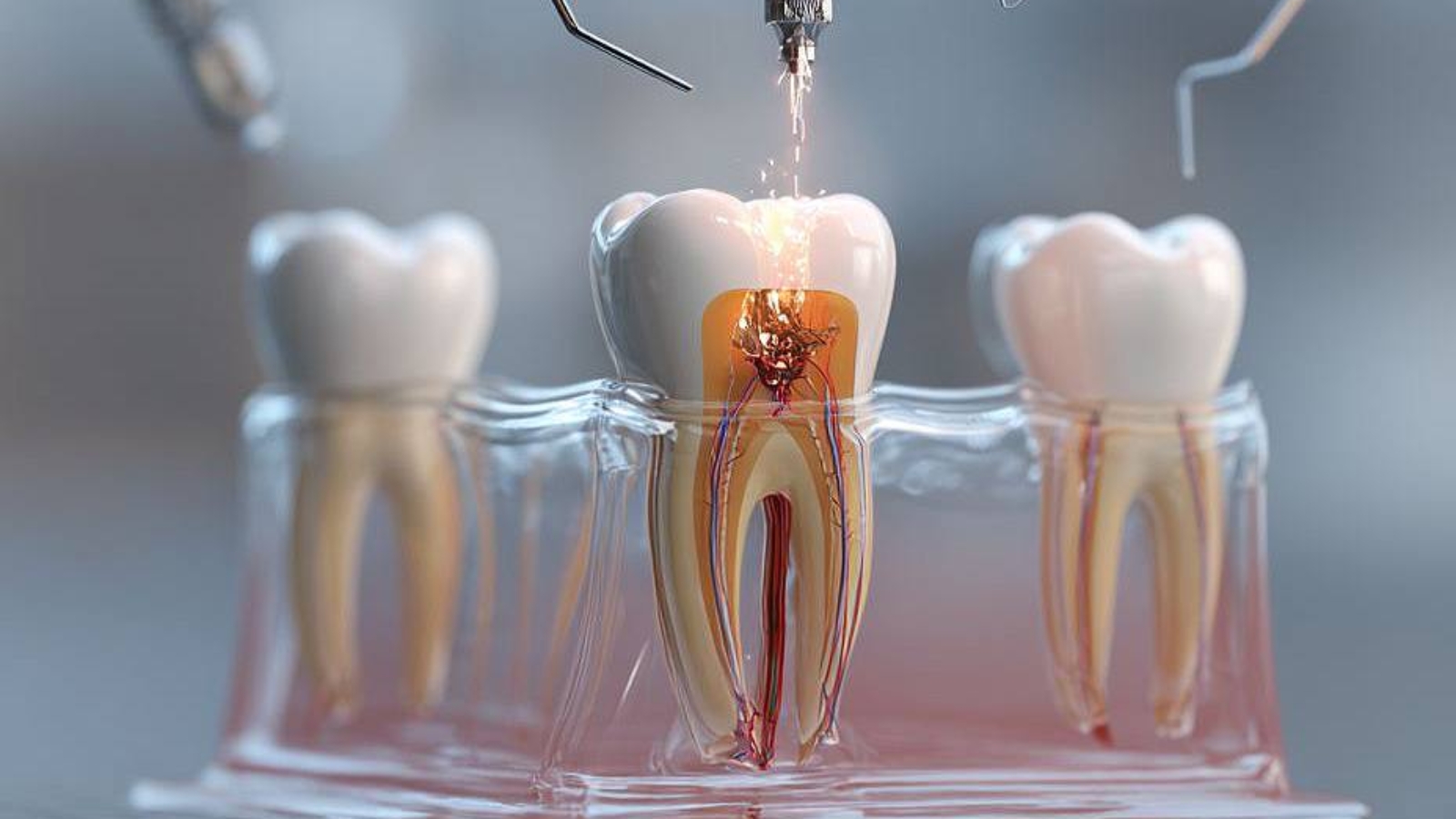
Preserving a natural tooth has traditionally been regarded as a priority in modern dentistry, yet this principle requires careful and evidence-based clinical evaluation. Professor Alexander von Breuer considers that an organ-preserving approach is justified only when it is grounded in objective prognosis assessment and does not increase biological or functional risks. At DentalClinic24, the strategy of tooth preservation is not driven by an emotional desire to “avoid extraction at any cost,” but by comprehensive diagnostics and a calculated evaluation of long-term treatment stability.
The boundary between reasonable treatment and unjustified prolongation of a compromised tooth often lies within what is known as a borderline prognosis. These are situations involving extensive coronal destruction, signs of chronic periapical inflammation, or significant loss of bone support. At DentalClinic24, each such case is analysed through three fundamental parameters – structural integrity, functional integration, and the feasibility of predictable reconstruction.
Structural integrity involves assessing root wall thickness, the extent of carious destruction, the presence of cracks, and the quality of previous endodontic treatment. If the remaining tissues are unable to withstand occlusal forces even after restoration, attempts at preservation may ultimately lead to root fracture or reinfection. At DentalClinic24, priority is given to solutions that minimise the risk of repeated interventions and secondary complications.
Functional integration is regarded as a decisive prognostic factor. A technically well-treated tooth may still become a weak link within the occlusal system. In cases of bruxism, occlusal imbalance, or segmental overload, the restored tooth is subjected to significantly increased stress. At DentalClinic24, occlusal load distribution is carefully analysed to determine whether the preserved tooth can maintain stable function within the dentofacial system.
The biological dimension is equally critical. Chronic infection foci, recurrent inflammatory processes, and advanced bone resorption significantly reduce the prognosis. Endodontic retreatment or surgical revision may be effective only when sufficient regenerative potential exists. At DentalClinic24, the decision to continue an organ-preserving strategy is made after evaluating inflammatory dynamics and the patient’s systemic condition.
In borderline cases, alternative rehabilitation methods must be considered. Implant placement or prosthetic replacement may provide a more predictable long-term outcome than repeated attempts to preserve a structurally compromised tooth. At DentalClinic24, different clinical scenarios are compared – analysing how the tooth is likely to behave over five to ten years and what risks are associated with each treatment pathway.
Tooth preservation strategy may also involve staged decision-making. In certain cases, a provisional restoration is placed, followed by reassessment after a defined observation period. This allows clinicians to evaluate tissue response and structural stability objectively. At DentalClinic24, dynamic monitoring is considered a prognostic refinement tool rather than a delay in definitive treatment.
Patient education plays a fundamental role. Understanding that preservation does not always equate to the best long-term outcome helps establish realistic expectations. At DentalClinic24, patients are informed about potential risks, the likelihood of repeated procedures, and alternative treatment options. This ensures that decisions are made consciously, based on medical, functional, and prognostic considerations.
Thus, the tooth preservation strategy at Dental Clinic24 is built upon a balance between biology, biomechanics, and long-term predictability. The organ-preserving approach has clearly defined clinical limits – beyond which it may increase the risk of future complications. Objective diagnostics, occlusal load analysis, and evaluation of systemic factors help determine when preservation is truly justified and when an alternative restorative solution is more rational. This balanced clinical algorithm ensures stability of outcomes while safeguarding the patient’s overall oral health.
Previously, we wrote about Metal-Free Ceramics at DentalClinic24 – Aesthetic Capabilities and Functional Stability of Modern Prosthetic Restorations