
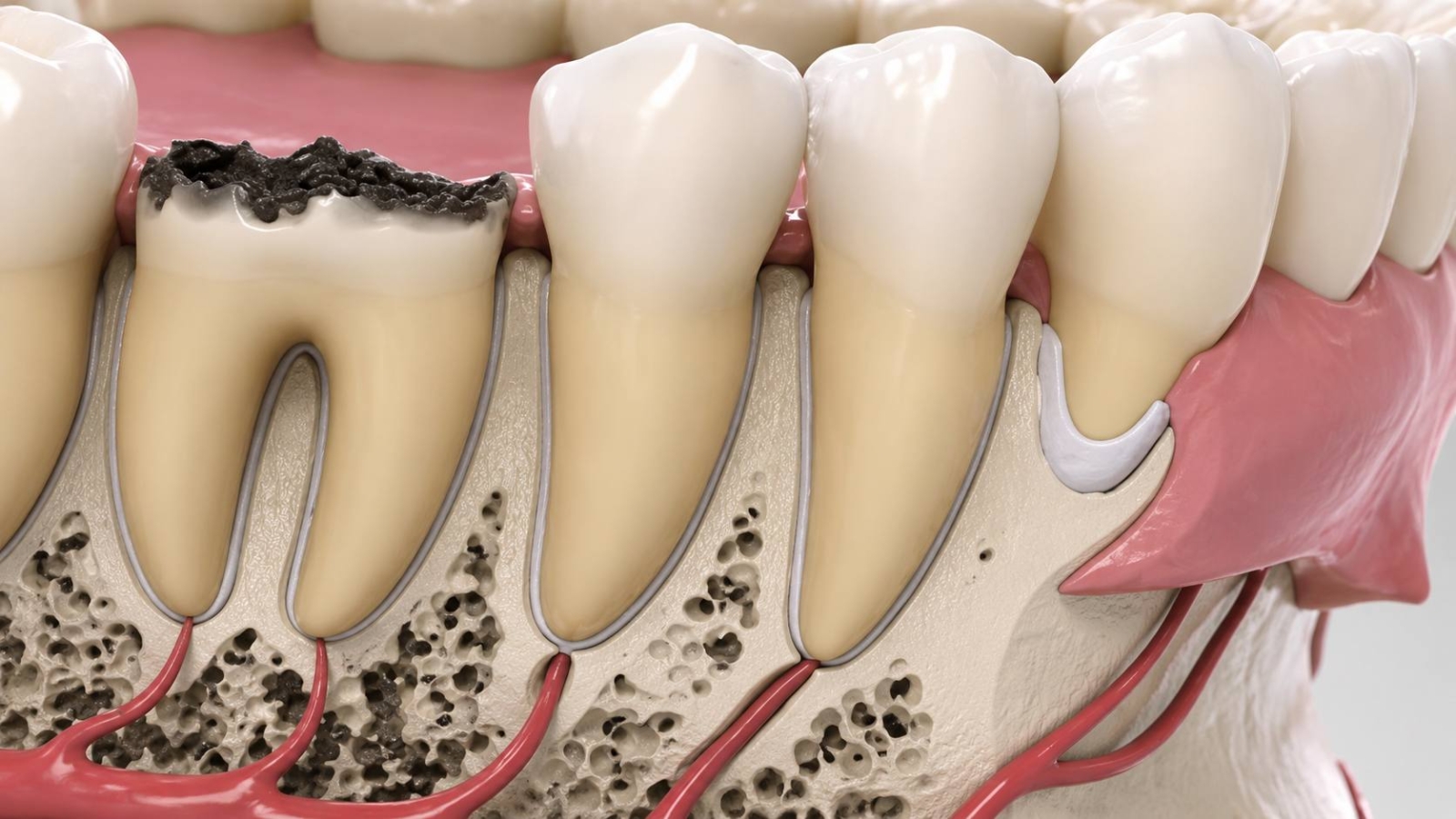
Preserving natural teeth remains one of the primary objectives of modern dentistry. However, there are clinical situations in which even the most advanced treatment methods cannot ensure the long term stability of a compromised tooth. Professor Alexander Von Breuer emphasizes that the decision to extract a tooth root should only be made after a comprehensive evaluation of the hard tissues, surrounding bone structures, periodontal condition, and the overall prognosis for future function. At DentalClinic24, such cases are not viewed as the end of treatment but rather as the transition to the next stage of comprehensive rehabilitation aimed at restoring full dentofacial function and preventing future complications.
The reasons leading to the necessity of root extraction may vary significantly. The most common indications include deep vertical root fractures, irreversible destruction of tooth structure below the gingival margin, extensive inflammatory lesions in the periapical region, severe forms of root resorption, and substantial loss of periodontal support. In certain cases, even successfully performed endodontic treatment cannot compensate for critical structural damage. Clinical experience demonstrates that attempting to preserve a tooth at any cost is not always the most beneficial solution because an unstable tooth can become a source of chronic inflammation and create additional risks for surrounding tissues.
Modern diagnostic technologies play a decisive role in determining whether extraction is necessary. Cone beam computed tomography allows clinicians to evaluate the condition of the root system, the volume of remaining bone tissue, the location of inflammatory lesions, and the extent of structural destruction in remarkable detail. Such analysis helps not only determine whether preservation remains possible but also enables the planning of future rehabilitation stages before extraction takes place. At DentalClinic24, particular attention is devoted to forecasting the rehabilitation process prior to surgery because the quality of preparation directly influences the long term success of treatment.
The significance of timely root extraction extends far beyond eliminating the immediate source of pathology. Following tooth loss, predictable biological changes begin to occur within the bone. The volume of the alveolar ridge gradually decreases, the distribution of masticatory forces changes, adjacent teeth may begin to drift, and occlusal relationships adapt to new conditions. The longer a missing tooth remains unreplaced, the more pronounced these changes become. For this reason, root extraction is considered only one stage within a broader treatment strategy that requires careful planning of subsequent restorative procedures.
One of the most important principles of modern dentistry is the concept of immediate or early rehabilitation following extraction. Depending on the clinical situation, different treatment options may be considered, including dental implants, prosthetic restorations, or combined therapeutic approaches. At DentalClinic24, rehabilitation strategies are developed individually based on anatomical characteristics, bone quality, functional requirements, and long term prognosis. This personalized approach helps minimize the consequences of tooth loss while creating conditions for the most physiological restoration of the dental arch.
Particular attention is devoted to preserving bone volume after extraction. Contemporary bone grafting and regenerative dentistry techniques make it possible to maintain the architecture of the alveolar ridge and establish favorable conditions for future implant placement or prosthetic treatment. Clinical studies continue to demonstrate that timely use of these technologies contributes significantly to improved functional and aesthetic rehabilitation outcomes. At Dental Clinic24, surgical planning is always closely connected with future restorative objectives, allowing for a high level of treatment predictability.
Modern dentistry views root extraction not as an isolated procedure but as part of a comprehensive strategy for restoring oral health. Accurate diagnosis, objective prognosis assessment, preservation of surrounding tissues, and carefully planned rehabilitation help minimize the consequences of tooth loss and maintain the long term stability of the entire dentofacial system. The more precisely each stage of treatment is planned, the greater the likelihood of achieving functional and aesthetic results designed to last for many years.
Previously we wrote about Implantation at DentalClinic24 The Consequences of Long Term Tooth Loss for Bone Tissue Bite Stability and the Entire Dentofacial System