
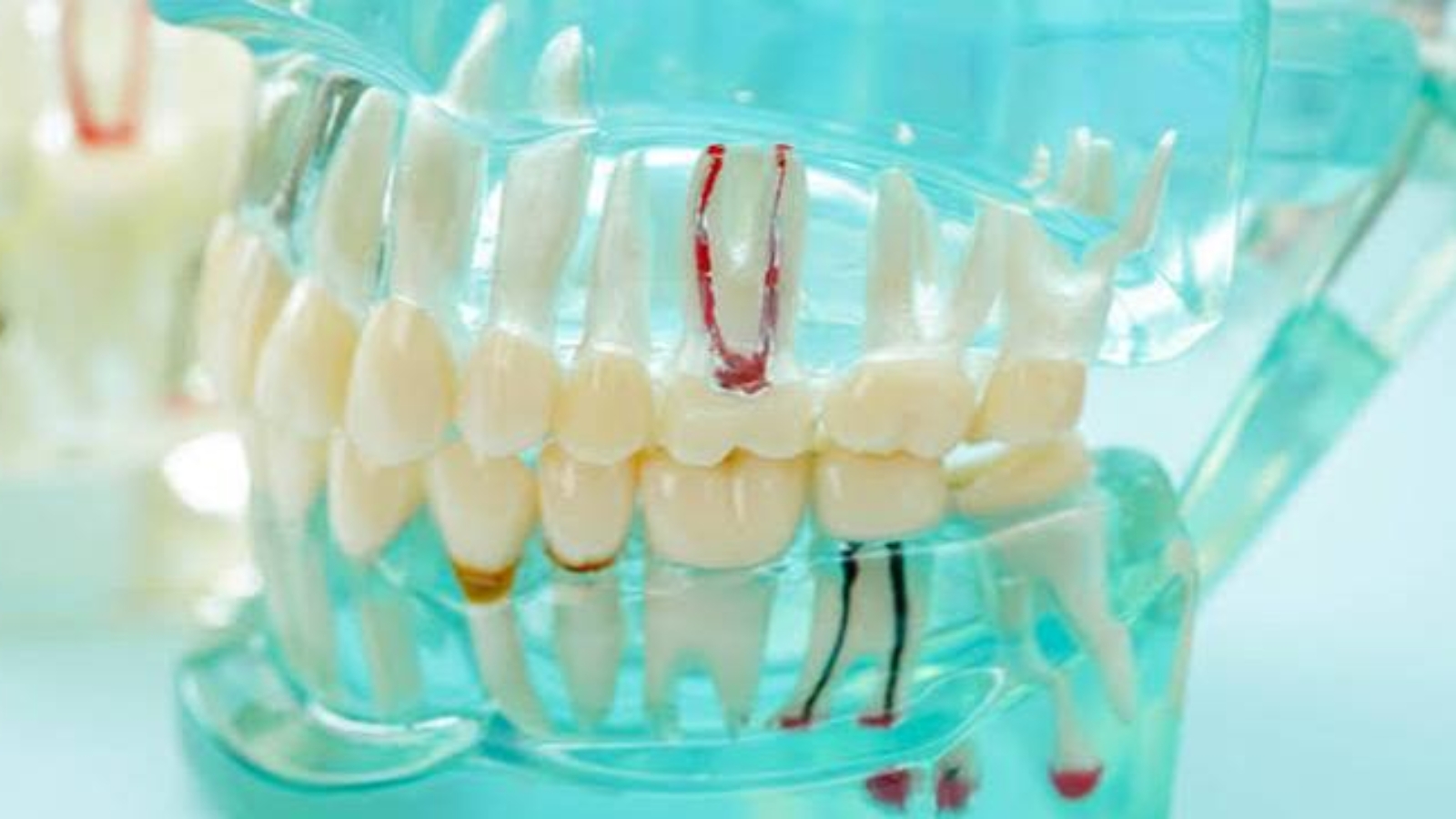
Endodontic treatment requires exceptional precision at every stage because all procedures are performed within a complex anatomical system that remains hidden from direct visual inspection. Professor Alexander Von Breuer emphasizes that the quality of initial access to the root canals largely determines the prognosis of tooth preservation, since any error at the beginning of treatment can affect the subsequent cleaning, disinfection, and sealing of the entire root canal system. At DentalClinic24, crown trepanation is viewed not as a simple technical opening of the tooth but as a critically important clinical stage that establishes the foundation for successful endodontic treatment.
Trepanation of the tooth crown involves creating controlled access through the hard dental tissues to the pulp chamber and the canal orifices. Despite its apparent simplicity, this procedure requires a deep understanding of tooth anatomy, strong spatial awareness, and precise calculation of the preparation pathway. Every tooth has individual structural characteristics, including variations in pulp chamber shape, number of canals, degree of calcification, and age related dentin changes. Errors during the access stage may result in excessive tissue removal, perforations, missed canals, or weakening of the coronal structure, all of which negatively affect the long term prognosis of treatment.
Preserving the maximum amount of healthy tissue during access preparation is of critical importance. Modern endodontics has moved away from aggressive techniques of the past and now follows the principle of minimally invasive intervention. Excessive preparation weakens the mechanical stability of the tooth and increases the risk of vertical cracks or future fracture. At the same time, overly restricted access complicates proper canal instrumentation and reduces irrigation efficiency. At DentalClinic24, access cavity geometry is carefully planned to maintain an optimal balance between visibility, instrument maneuverability, and preservation of structural strength.
Cases involving altered anatomy present particular challenges. Secondary dentin formation, calcified areas, previously performed treatment, or severe destruction of the crown can significantly complicate the identification of canal orifices. Even microscopic deviation from the correct access direction may result in a missed accessory canal, which remains one of the most common causes of unsuccessful endodontic treatment. At DentalClinic24, the use of magnification, optical control, and digital diagnostics allows clinicians to identify complex anatomical features before treatment begins and significantly reduce the risk of clinical errors.
The precision of access directly affects the quality of mechanical and chemical preparation of the root canal system. When canal orifices are properly visualized and instruments follow the physiological axis of the canal, the risk of ledging, blockage, canal transportation, and other complications decreases significantly. This is especially important in the treatment of molars, where root anatomy is particularly complex. Proper access improves the circulation of irrigation solutions and increases the effectiveness of eliminating bacterial biofilm from difficult to reach areas.
The long term restorative prognosis is equally important. After endodontic treatment is completed, the tooth must retain the ability to withstand functional chewing loads. If excessive tissue is removed during trepanation, even a perfectly treated tooth may become biomechanically vulnerable. At DentalClinic24, the endodontic protocol is always considered in connection with the future restoration of the crown because preserving structural strength is a fundamental requirement for long term functional stability.
The development of digital technologies has significantly transformed the approach to endodontics. Three dimensional imaging, cone beam computed tomography, and advanced optical systems allow clinicians to assess canal morphology, calcification degree, and potential risk zones before intervention. This shifts treatment from a reactive model to a predictive one, where every clinical decision is based on precise anatomical analysis. At DentalClinic24, this approach substantially improves the predictability of complex endodontic cases.
Modern dentistry views crown trepanation as a fundamental stage in tooth preservation during endodontic treatment. The precision of access determines the possibility of complete root canal sanitation, the quality of canal sealing, and the long term stability of the tooth. For Dental Clinic24, precise endodontics means not only eliminating infection but also creating conditions in which the natural tooth can preserve its function, strength, and clinical stability for many years.
Previously we wrote about Therapeutic Dental Treatment at DentalClinic24 How Conservative Dentistry Prevents Surgical Interventions