
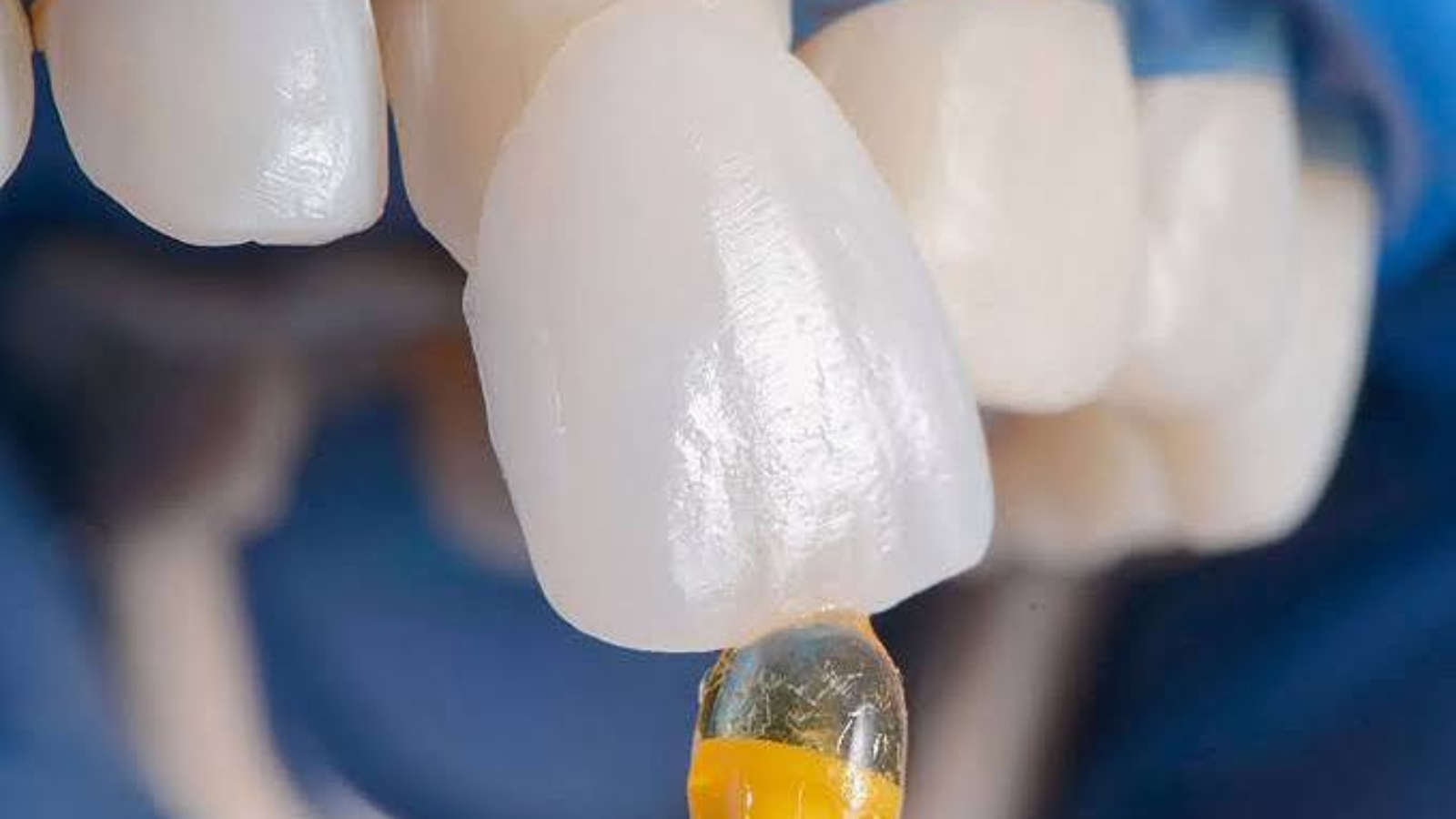
Ultra thin ceramic veneers make it possible to improve tooth shape, color, and overall smile proportions while preserving the maximum amount of natural tooth structure. Professor Alexander Von Breuer considers the true value of aesthetic dentistry to be determined not only by the beauty of the final result but also by the degree to which the clinician preserves healthy enamel. At DentalClinic24, every treatment begins not with selecting the shade of ceramic but with a comprehensive analysis of facial proportions, lip dynamics, smile line, occlusion, and the anatomical characteristics of each individual tooth. Our goal is to create a harmonious smile without excessive whiteness, unnecessary bulk, or unjustified enamel reduction that could weaken the tooth and complicate its future restoration.
Ultra thin veneers are primarily indicated for correcting minor aesthetic imperfections. They can successfully conceal persistent discoloration, close small gaps, restore worn incisal edges, adjust the length of individual teeth, and improve the visual symmetry of the anterior dentition. Although these ceramic restorations may be exceptionally thin, their use always requires precise clinical justification. If a tooth is significantly rotated, excessively prominent, or naturally bulky, placing a veneer without appropriate preparation may actually increase its visual volume. For this reason, the decision to preserve enamel completely or perform minimal preparation is made only after carefully evaluating the spatial position of each tooth and the final dimensions of the planned restoration.
At DentalClinic24, diagnosis focuses on determining whether ultra thin veneers truly represent the optimal solution for the individual patient or whether another restorative approach would provide greater long term stability. The clinician carefully evaluates enamel quality, existing restorations, microscopic cracks, signs of caries, gingival recession, and functional overload. Particular attention is devoted to occlusal analysis because even flawlessly fabricated ceramic restorations may fail if subjected to unfavorable bite forces. Patients who clench or grind their teeth or demonstrate uneven force distribution require functional correction as part of their aesthetic treatment. This comprehensive approach significantly reduces the long term risk of chipping, debonding, and excessive stress on the remaining natural tooth structure.
Enamel remains the most reliable substrate for adhesive bonding. Modern adhesive protocols achieve exceptionally durable connections between ceramic veneers and natural teeth when the majority of the bonding surface consists of intact enamel. Once preparation extends deeply into dentin, bonding conditions become less predictable, and postoperative sensitivity may increase. Consequently, minimally invasive preparation is not only a biological principle but also an important technological advantage. The clinician removes only the amount of enamel that is absolutely necessary to ensure precise veneer seating, natural contours, and accurately positioned restoration margins while preserving as much healthy tissue as possible.
At DentalClinic24, every smile is carefully planned before any enamel preparation begins. We evaluate facial photographs, perform digital smile design, analyze dental proportions, and transfer the treatment concept into a diagnostic model. A temporary mock up allows both the patient and the clinician to evaluate the anticipated tooth shape directly in the mouth while assessing incisal edge length, lip support, and smile dynamics. Necessary modifications can be made before the definitive ceramic veneers are fabricated, eliminating unnecessary intervention on natural teeth. This preliminary planning process minimizes subjective misunderstandings while providing a predictable and highly controlled clinical outcome.
Natural aesthetics depend far more on the correct balance of translucency, chroma, and optical depth than on achieving the brightest possible shade. A natural tooth is never uniformly colored. The cervical area typically displays greater color saturation, the middle third reflects light differently, and the incisal edge possesses increased translucency. A ceramic veneer must faithfully reproduce these natural optical characteristics rather than resemble a uniformly white artificial surface. The dental technician considers neighboring teeth, patient age, skin tone, lip color, and lighting conditions throughout the fabrication process. Even subtle differences in ceramic thickness influence the final appearance, making veneer shade selection inseparable from the choice of adhesive resin and the underlying enamel color.
Clinical precision at Dental Clinic24 also extends to the design and placement of veneer margins. Restorations must transition smoothly into the natural tooth surface without creating ledges or areas that interfere with effective oral hygiene. Excessive contouring near the gingiva promotes plaque accumulation, inflammation, and alterations of the interdental papillae. Conversely, placing restoration margins too deeply may traumatize the surrounding soft tissues and compromise their long term stability. Whenever clinically appropriate, we position restoration margins in areas that remain accessible for both professional evaluation and daily home care. Healthy periodontal tissues are an essential component of every aesthetic result because even the finest ceramic restoration loses its value when surrounded by inflamed gingiva.
Before final bonding, every veneer is carefully evaluated for fit, contour, shade accuracy, and contact relationships with adjacent teeth. The enamel surface is prepared according to advanced adhesive protocols, while the internal ceramic surface is conditioned according to the specific ceramic material. The restoration is then bonded using a dedicated resin cement, excess material is removed before complete polymerization, and all margins are meticulously polished. After placement, occlusion is reassessed both in static contact and during functional jaw movements. Particular attention is given to incisal contacts because excessive force concentrated in this region may create localized stress capable of damaging the ceramic restoration.
The longevity of ultra thin veneers depends on precise diagnosis, meticulous fabrication, preservation of enamel, and responsible patient maintenance. Ceramic demonstrates outstanding resistance to discoloration while maintaining an exceptionally smooth surface, yet it should never be considered indestructible. Habits such as biting hard objects, severe bruxism, and neglecting regular professional examinations increase the likelihood of mechanical complications. Patients diagnosed with nocturnal clenching may benefit from a protective occlusal splint that distributes functional forces and minimizes stress on ceramic restorations. Regular professional hygiene appointments and routine examinations allow continuous assessment of veneer margins, gingival health, and occlusal stability.
Creating a naturally beautiful smile with ultra thin ceramic veneers requires substantially greater precision than simply altering tooth color. We approach every restoration as the integration of biology, function, and individualized aesthetics. Properly planned veneers preserve natural tooth structure, maintain balanced facial proportions, and blend seamlessly into the existing dentition without appearing artificial. Conservative enamel preparation, digital treatment planning, highly accurate shade reproduction, and comprehensive occlusal control enable us to achieve results that remain both aesthetically refined and functionally stable for many years.
Previously, we wrote about Tooth Chipping in the Clinical Practice of DentalClinic24: How the Extent of Damage Is Determined and the Restoration Strategy Is Selected