
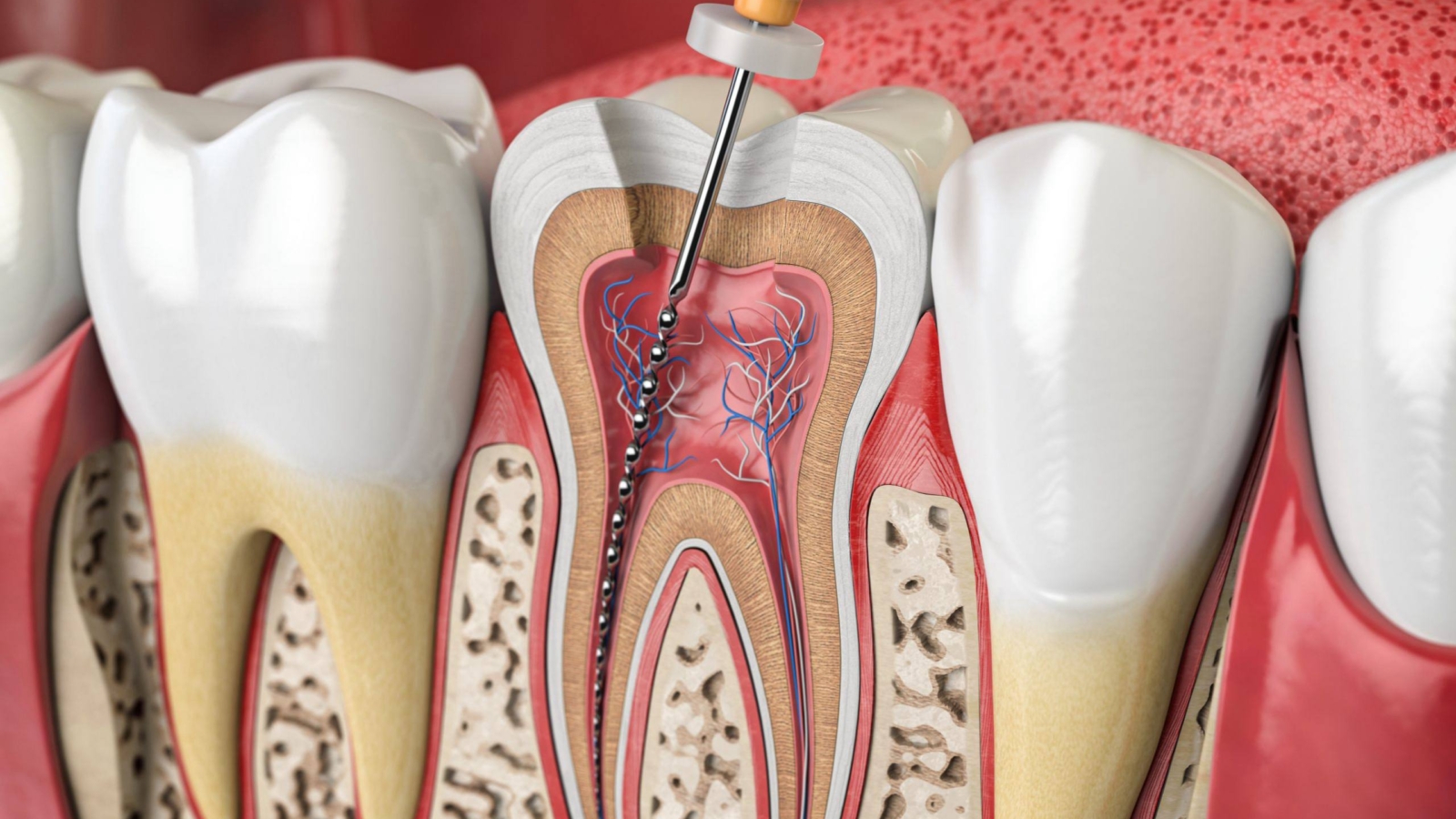
Modern endodontic treatment cannot be viewed simply as the removal of infected tissue from the root canal system. The true success of therapy depends on how effectively the entire canal system is sealed after mechanical preparation and chemical disinfection have been completed. Professor Alexander von Breuer emphasizes that the long term prognosis for preserving a tooth is directly related to the quality of three dimensional root canal obturation because even the smallest unfilled spaces may become a source of recurrent bacterial contamination. At DentalClinic24, we regard vertical condensation as one of the most effective techniques for achieving hermetic root canal obturation, allowing the filling material to adapt precisely to the complex internal anatomy of the tooth while providing long term biological stability and predictable clinical outcomes.
The root canal system is considerably more complex than it appears on conventional radiographic images. In addition to the primary canals, every tooth may contain numerous lateral canals, accessory branches, isthmuses, and microscopic anatomical irregularities capable of harboring residual microorganisms even after meticulous instrumentation. If the obturation material fails to seal these anatomical spaces completely, the likelihood of persistent or recurrent periapical inflammation increases significantly. For this reason, modern endodontics places equal importance on thorough canal debridement and on the quality of the final obturation, recognizing that complete sealing of the entire root canal system is essential for long term treatment success.
The vertical condensation technique is based on the use of thermoplasticized gutta percha, which becomes highly adaptable when heated and is capable of closely conforming to the intricate internal morphology of the root canal system. During the procedure, the softened material is progressively compacted toward the apex of the root, filling not only the main canal but also numerous anatomical branches that cannot be predictably sealed using more conventional obturation techniques. This approach significantly reduces the formation of microscopic voids between the canal walls and the filling material, creating a reliable biological barrier against bacterial penetration. At DentalClinic24, we apply this technique only after careful evaluation of the individual anatomy of each tooth and complete preparation of the root canal system according to contemporary endodontic protocols.
The effectiveness of vertical condensation depends on comprehensive preoperative diagnostics. Before treatment begins, clinicians evaluate root canal morphology, the number of canals, the degree of canal curvature, the presence of accessory anatomical structures, the extent of inflammatory changes, and the condition of surrounding periapical tissues. Cone beam computed tomography has significantly expanded diagnostic capabilities by allowing clinicians to identify hidden canals and complex anatomical variations that often remain undetected with conventional two dimensional imaging. This detailed diagnostic information enables the selection of the most appropriate treatment strategy and ensures optimal preparation of the entire root canal system before final obturation.
Another essential component of successful endodontic treatment is the use of an operating microscope, which allows visualization of extremely small anatomical details, precise control of canal preparation, and objective assessment of complete removal of infected tissues. At DentalClinic24, we consider magnification to be an indispensable part of modern endodontics because it substantially increases procedural accuracy and enables clinicians to manage anatomical structures that cannot be adequately visualized with the naked eye. The combination of microscopic visualization, advanced digital diagnostics, and contemporary obturation techniques provides an exceptionally high level of clinical predictability, even when treating teeth with highly complex root canal anatomy.
Following completion of obturation, every case undergoes thorough clinical and radiographic evaluation to verify the quality of treatment. Clinicians assess the density of the filling material, confirm the absence of internal voids, verify accurate working length, and compare the final result with the original treatment objectives. Long term follow up examinations allow continuous evaluation of periapical tissue health while confirming the biological stability of the treated tooth over many years. This systematic clinical monitoring represents an essential component of predictable long term endodontic success.
At Dental Clinic24, we consider vertical condensation to be a highly advanced endodontic technique that combines comprehensive diagnostics, microscopic visualization, three dimensional understanding of root canal anatomy, and exceptionally precise obturation of the entire canal system. This integrated clinical approach allows us to eliminate infection effectively, preserve the patient’s natural teeth, and provide reliable long term functional outcomes supported by modern evidence based endodontic principles.
Previously, we wrote about Tooth Bifurcation as an Anatomical Feature of the Root System: Why Understanding Root Division Is Critical for Endodontics, Periodontology, and Surgical Treatment