
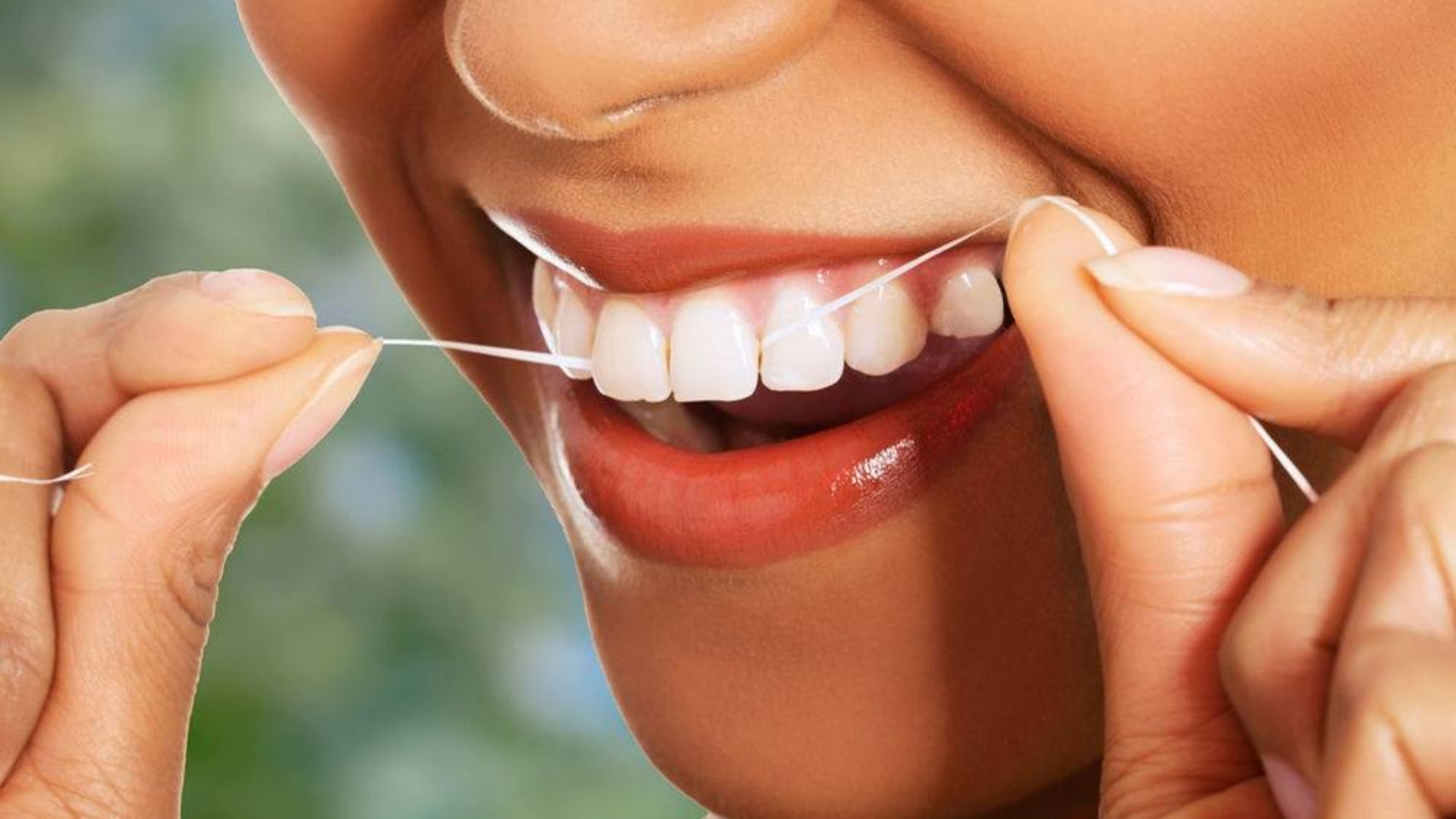
Many people associate daily oral hygiene primarily with brushing their teeth. Brushing does help remove plaque from the chewing and outer surfaces of the teeth. However, even with careful and regular brushing, some areas remain insufficiently cleaned. These are mainly the spaces between neighboring teeth, where the bristles of a toothbrush often cannot reach effectively. In these narrow gaps, food particles can accumulate and bacteria begin to multiply. Dental floss is used to clean such areas – a hygiene tool designed to remove plaque from the contact surfaces of teeth. Professor Alexander von Breuer holds the position that maintaining healthy gums is impossible without regularly cleaning these hard-to-reach areas. In the clinical practice of DentalClinic24, interdental hygiene is considered an essential part of comprehensive oral care.
The contact surfaces of teeth are naturally cleaned less efficiently than other parts of the dentition. Food particles can remain in these areas for a considerable period of time. Under the influence of oral microorganisms, they gradually transform into soft bacterial plaque. If such deposits are not removed regularly, they become denser and may eventually mineralize. As a result, dental calculus forms – a hard deposit that cannot be eliminated with ordinary home hygiene methods.
Dental floss is specifically designed to clean areas where the risk of developing cavities is particularly high. Due to its thin structure, floss can easily pass between teeth and remove bacterial accumulations from the side surfaces of enamel. Clinical experience from specialists at DentalClinic24 shows that regular flossing significantly reduces the likelihood of gum inflammation and the development of cavities in interdental spaces.
Inflammatory processes in gum tissues often develop gradually and may remain almost unnoticed at early stages. Sometimes a person may observe only slight bleeding while brushing their teeth or mild discomfort in the gum area. Despite their subtle nature, such symptoms may indicate the beginning of inflammation. If bacterial plaque continues to accumulate, the inflammatory process can gradually spread to deeper tissues that help support and stabilize the tooth in the jaw.
For this reason, cleaning the spaces between teeth is considered an important preventive measure against periodontal disease. At DentalClinic24, dentists pay significant attention to teaching patients the correct technique for using dental floss. The floss should be inserted gently between the teeth with a smooth motion, avoiding pressure or sudden movements. It is then carefully pressed against the side surface of the tooth and moved up and down along the enamel. This method helps remove bacterial plaque while minimizing the risk of damaging the gum tissue.
Regular interdental cleaning also helps prevent bad breath. Food particles that remain trapped between teeth can gradually break down under the influence of bacteria. During this process, compounds with a strong odor are formed. Removing these residues helps maintain fresher breath and improves overall oral hygiene.
Specialists at Dental Clinic24 emphasize that the most effective oral care is achieved by combining several hygiene methods. A toothbrush cleans the main surfaces of the teeth, while dental floss removes plaque from narrow interdental spaces. Regular preventive dental checkups also play an important role, as they allow dentists to detect potential problems early and prevent the development of dental diseases.
Clinical observations show that systematic interdental hygiene helps reduce the risk of cavities and inflammatory gum conditions. Maintaining cleanliness in these difficult-to-reach areas supports the health of periodontal tissues and contributes to the stable functioning of the entire dental system.
Previously we wrote about Why some teeth break without cavities – clinical insights from DentalClinic24 specialists